

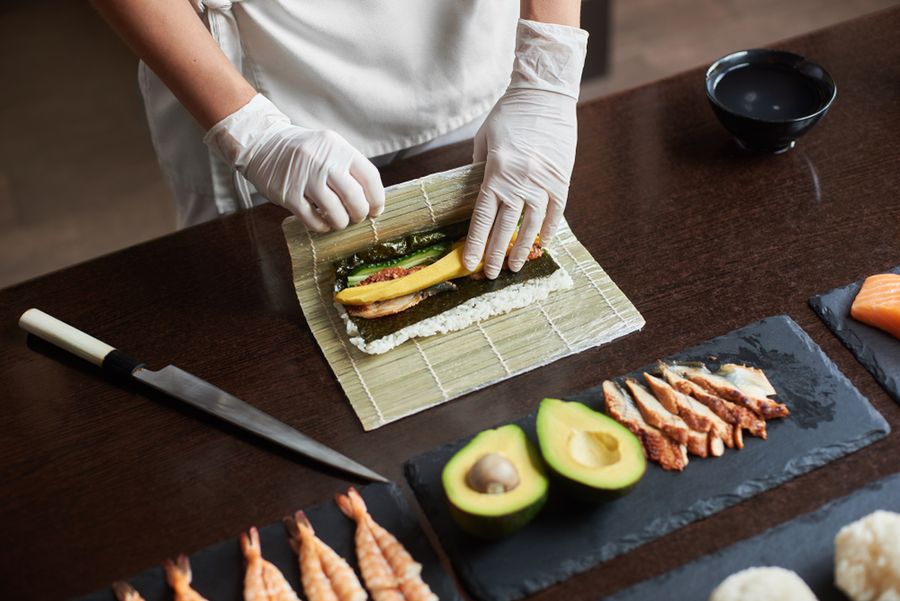
There is something special about making sushi at home, whether you are hosting a roll-your-own dinner with friends or just want a quiet night in the kitchen. The good news is you do not need chef training to pull it off. The right tools turn a tricky meal into a fun, hands-on project. It's helpful to understand the gear that real sushi chefs and home cooks reach for first, so your DIY night feels smooth from start to slice.
The Bamboo Rolling Mat: Your Sushi Foundation
A bamboo rolling mat, sometimes called a makisu, is the first tool most beginners need. A makisu is essential for your first couple of sushi rolls because it holds everything in place while you form a tight cylinder (source). You place your nori, rice, and fillings on the mat, then roll, give a few firm squeezes, and slide the mat away to slice.
The mat is small, easy to store, and works even better with a few simple habits. Always cover it with a layer of plastic wrap before rolling, which stops rice from getting trapped in the bamboo and makes cleanup quick. If you do not own a mat yet, a clean lint-free kitchen towel covered in cling wrap or even a Ziploc bag will work in a pinch (source).
A Reliable Rice Cooker for Sushi-Quality Rice
If fish is the heart of sushi, rice is right behind it, which is why a rice cooker is the most important tool in a home sushi kitchen (source). It takes the guesswork out of cooking grains, so you do not end up with crunchy bottoms or mushy tops. You just measure, fill with water, press a button, and walk away while it does the work.
Make sure you reach for short-grain sushi rice, since it has more starch and a stickier texture that helps the rolls hold together (source). Many rice cookers keep the rice warm after it is done, which gives you time to slice fish, prep vegetables, and set the table without watching the clock. For DIY nights with a crowd, that hands-off cooking can be the difference between calm and chaos.
A Wooden Rice Paddle and a Wide Mixing Bowl
Once the rice is ready, you need a tool to move and season it without crushing the grains. A wooden rice paddle, called a shamoji, is the classic choice because it lets you fold rice vinegar through the rice without smashing the grains and ruining the texture (source). A cedar paddle works especially well because the wood gently absorbs the vinegar, which adds a nice balance to the finished rice.
Pair the paddle with a wide, shallow bowl so the rice can cool quickly while you mix in the vinegar. The bigger the surface area, the faster the grains cool, and cool rice is much easier to shape and roll. A simple wooden salad bowl or a large mixing bowl will do the job if you are not ready to buy a traditional Japanese sushi tub.
A Sharp Knife (and a Way to Keep It Sharp)
A sharp knife is non-negotiable for clean rolls and pretty slices. A good chef's knife in the 6 to 8 inch range is a smart starting point, since one tool can handle vegetables, fish, and the finished rolls (source). Clean cuts are one of the most important parts of homemade sushi, and you cannot make those cuts with a dull knife.
When you slice the roll, use one clean motion per cut and avoid sawing back and forth, which will tear the nori (source). Wipe the blade between cuts to keep stray rice from dragging through the next slice. Over time, plan on a sharpening stone to bring the edge back, because even great knives go dull with use, and a dull knife is actually more dangerous than a sharp one (source).
Small Helpers That Make a Big Difference
A few small tools quietly carry a lot of weight on sushi night. Keep a bowl of warm water on your work surface for wetting your fingers, since damp hands stop sticky rice from glomming onto your palms (source). A pair of fish tweezers is also smart, because even cleaned fish can have pin bones that need to be pulled before slicing (source).
A sturdy cutting board, ideally a large wooden one for raw fish, gives you steady space to work and helps prevent cross-contamination if you keep a separate board for produce (source). Round out the kit with chopsticks for placing fillings and eating, plus a few small dipping bowls for soy sauce and wasabi, which add a polished finish to the meal (source).
Wrapping It Up: Build the Kit, Then Have Fun
You do not need every item on this list before your first DIY sushi night. A bamboo mat, a rice cooker, a sharp knife, and a couple of bowls will get you rolling tonight, and you can add a wooden paddle, sharpening stone, or fish tweezers as your skills grow. The goal is to clear away the small frustrations that get between you and a clean, tasty roll.
Once the gear is in place, the rest is play. Set out fillings buffet-style, invite friends to build their own rolls, and treat the first wobbly attempts as part of the fun. Each session sharpens both your knife skills and your eye, and before long, the rolls coming off your bamboo mat will look like they belong on a real sushi bar.